
 Los Altos, CA

When it comes to treating tendon pain, heel pain, or chronic soft tissue conditions, two options often come up in the same conversation: shockwave vs cortisone injection. Both can provide pain relief — but they work differently, have different goals, and suit different situations. This post breaks down the key differences so you can have a more informed conversation with your provider about what makes sense for your condition.
9 min read · Educational
- Shockwave therapy vs cortisone injection is not a matter of one being universally better — the right choice depends on the condition, how long it’s been present, and your treatment goals.
- Cortisone injections reduce inflammation quickly but don’t repair tissue — results are often temporary, especially for chronic tendon conditions.
- Shockwave therapy stimulates the body’s own healing biology — it takes more sessions but produces more durable outcomes for chronic soft tissue and tendon pain.
- Repeated cortisone injections carry documented risks including tendon weakening; shockwave therapy has no such tissue-damaging side effects.
- For most chronic tendon presentations — plantar fasciitis, tennis elbow, Achilles tendinopathy — shockwave therapy is now supported as a first-line treatment in clinical research.
Shockwave or Cortisone Injection: A Quick Comparison
Both shockwave therapy and cortisone injections are used for musculoskeletal pain — but they work in fundamentally different ways. Cortisone injections target inflammation to provide faster symptom relief, while shockwave therapy delivers acoustic energy to stimulate the body’s own healing response and tissue repair. Cortisone is often faster; shockwave tends to produce more durable results for chronic tendon and soft tissue conditions. The right choice depends on the diagnosis, symptom duration, and treatment goals.
What Is Shockwave Therapy?
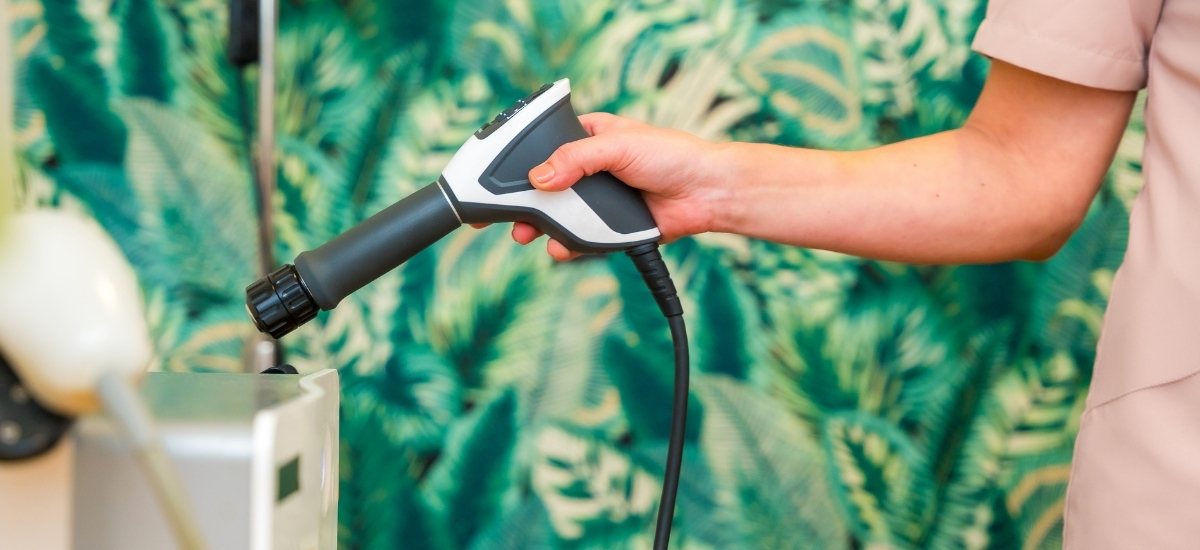
Shockwave therapy — more precisely, Shockwave Regenerative Therapy — is a non-invasive treatment that uses focused acoustic energy delivered through a handheld probe to the skin surface over an injured area. It’s used for tendon injuries, soft tissue pain, calcific conditions, and chronic musculoskeletal problems that haven’t responded adequately to rest and standard conservative care.
It’s called regenerative because it doesn’t just mask the pain — it triggers the body’s own biological repair processes. The acoustic waves create controlled microtrauma in the target tissue, which activates fibroblasts, stimulates collagen remodeling, improves local blood flow, and reduces the neurochemicals that keep tissue sensitized and painful.
How Shockwave Therapy Works
- Acoustic energy is delivered through a probe placed against the skin — no needles, no incisions
- Controlled microtrauma at the treatment site triggers a fresh biological healing response
- Stimulates new blood vessel formation, improving circulation to poorly healing tissue
- Activates fibroblasts and collagen remodeling — rebuilding the structural quality of damaged tendon or fascia
- Reduces substance P and other pain-amplifying neurochemicals, calming sensitized tissue
- Sessions run approximately 15–30 minutes; most patients receive 3–6 sessions
Common Conditions Treated with Shockwave Therapy
| Condition | How Shockwave Therapy Helps |
|---|---|
| Plantar fasciitis | Breaks down calcific deposits, stimulates fascial repair, reduces chronic inflammation at heel insertion |
| Tennis elbow (lateral epicondylitis) | Restimulates healing in degenerated tendon tissue that has failed to repair on its own |
| Achilles tendinopathy | Remodels disorganized collagen in the tendon, improves tensile strength and reduces pain |
| Calcific shoulder tendinopathy | Breaks up calcium deposits and stimulates reabsorption |
| Patellar tendinopathy | Addresses chronic degeneration in the knee tendon, often seen in runners and jumping athletes |
| Hamstring tendinopathy | Treats proximal hamstring tendon degeneration and chronic insertion pain |
What Is a Cortisone Injection?
A cortisone injection — also called a corticosteroid or steroid injection — delivers a synthetic version of the body’s own cortisol directly into an inflamed area. It’s a well-established medical intervention used to reduce inflammation and provide pain relief in joints, bursae, and soft tissues.
How Cortisone Injections Work
- A corticosteroid is injected directly into or near the affected area — joint, tendon sheath, or bursa
- Suppresses the local inflammatory response, reducing swelling, heat, and pain
- Often combined with a local anaesthetic for immediate relief at the time of injection
- Pain relief typically begins within 2–7 days and can last weeks to months
- Does not repair damaged tissue — it reduces the inflammatory signal, not the underlying structural problem
Common Conditions Treated with Cortisone Injections
| Condition | Why Cortisone May Be Used |
|---|---|
| Bursitis | Reduces inflammation in the fluid-filled sac causing acute localized pain |
| Osteoarthritis flare-ups | Provides temporary relief during acute inflammatory flare-ups in a joint |
| Trigger finger | Reduces inflammation in the tendon sheath to restore smooth movement |
| Rotator cuff tendinopathy | Short-term pain reduction to allow participation in rehabilitation |
| Carpal tunnel syndrome | Reduces nerve compression symptoms caused by surrounding inflammation |
| Plantar fasciitis (acute) | Anti-inflammatory effect for short-term relief in acute cases |
Shockwave Therapy vs Cortisone Injection: Key Differences
| Factor | Shockwave Therapy | Cortisone Injection |
|---|---|---|
| Treatment method | Non-invasive — external probe, no needles | Invasive — needle injection into or near tissue |
| Primary goal | Stimulate tissue healing and repair | Reduce inflammation and relieve pain |
| Speed of relief | Gradual — improvement typically over 3–6 sessions | Faster — often within days of injection |
| Sessions needed | Typically 3–6 sessions over several weeks | Usually 1 injection; may be repeated |
| Best for | Chronic tendon and soft tissue conditions | Acute inflammation, bursitis, joint flare-ups |
| Tissue repair | Yes — stimulates collagen remodeling | No — suppresses inflammation, doesn’t repair |
| Duration of results | More durable in chronic tendinopathy | Temporary — weeks to months typically |
| Downtime | Minimal — mild soreness possible after sessions | Possible flare reaction 24–48 hrs; activity restriction advised |
| Repeat treatment risks | No cumulative tissue damage risk | Repeated cortisone can weaken tendon and cartilage |
Benefits of Shockwave Therapy
Non-invasive Approach
Shockwave therapy requires no needles, no incisions, and no anaesthetic. The entire treatment is delivered externally through a handheld probe. For patients who are uncomfortable with injections, have concerns about repeated steroid exposure, or want to avoid any procedure that penetrates the skin, shockwave is a compelling option that doesn’t involve those trade-offs.
Supports Healing in Chronic Conditions
This is the most clinically significant advantage of shockwave therapy over cortisone for tendon conditions. Chronic tendinopathies like tennis elbow, Achilles tendinopathy, and plantar fasciitis are not primarily inflammatory conditions — they’re degenerative ones. The collagen structure of the tendon has broken down, blood supply is poor, and the tissue is no longer actively healing. Cortisone addresses inflammation that often isn’t the primary problem. Shockwave restimulates the biological repair processes that have gone quiet — producing structural improvement, not just symptom suppression.
Minimal Downtime
Most patients can return to normal daily activities immediately after a shockwave session. Mild soreness at the treatment site is common for 24–48 hours following a session and is generally considered a sign that the healing response has been activated. High-impact activity is typically modified during the course of treatment, but there is no significant activity restriction or recovery period after individual sessions.
Benefits of Cortisone Injections
Fast Pain Relief
The primary advantage of cortisone is speed. For someone whose pain is severe enough to prevent participation in rehabilitation, a cortisone injection can reduce pain quickly enough to make movement and exercise possible — which matters when the goal is to get someone into a therapeutic program. It’s a tool for buying a window of reduced pain, not a standalone treatment.
Reduces Inflammation Quickly
For genuinely inflammatory conditions — bursitis, acute synovitis, inflammatory arthritis flare-ups — cortisone is highly effective because the primary driver is inflammation. In these cases, suppressing the inflammatory process directly addresses the cause rather than just masking symptoms.
Convenient for Short-term Symptom Management
A cortisone injection is a single appointment. For patients managing a high workload, an upcoming event, or a specific activity they need to participate in, the convenience of a single-session treatment with rapid results has genuine practical appeal — as long as the expectations around duration of relief and the need for rehabilitation alongside it are clearly set.
Which Treatment Lasts Longer?
For most chronic tendon conditions, shockwave therapy produces more durable long-term outcomes than cortisone injection. Research consistently shows that while cortisone produces faster initial relief, by 3–6 months the outcomes for shockwave therapy are significantly better — and cortisone outcomes frequently deteriorate back to baseline or worse.
A landmark study published in the Journal of the American Medical Association comparing treatments for chronic plantar fasciitis found that shockwave therapy produced superior long-term outcomes compared to cortisone, which showed initial improvement but no sustained benefit at follow-up.
| Timeframe | Shockwave Therapy | Cortisone Injection |
|---|---|---|
| 1–2 weeks | Mild improvement beginning; soreness common | Often significant pain reduction |
| 4–6 weeks | Progressive improvement as tissue remodels | Relief may begin to taper |
| 3 months | Substantial improvement; tissue healing ongoing | Relief often significantly reduced |
| 6–12 months | Durable improvement; structural tissue change | Symptoms frequently return to baseline |
How a Physiotherapist Decides Between Shockwave and Cortisone
The choice between these treatments is never made based on the symptom alone. A thorough clinical assessment determines which is appropriate — and in many cases the answer is neither in isolation, but a combination of treatments alongside a structured rehabilitation program.
Key factors that shape the decision include the type of tissue involved (tendon, bursa, joint, fascia), how long symptoms have been present, whether the presentation is primarily inflammatory or degenerative, the patient’s activity level and goals, and what previous treatments have been tried. At PhysioFit, this assessment guides every treatment recommendation — ensuring the approach is matched to what’s actually driving the pain, not just the area of the complaint.
Which Option Is Better for Specific Conditions?
Plantar Fasciitis
Plantar fasciitis is one of the most studied conditions in the shockwave vs cortisone comparison. For acute cases with significant inflammation, cortisone can provide faster short-term relief. For chronic plantar fasciitis — which is the vast majority of cases presenting to clinic — shockwave therapy consistently outperforms cortisone at 3-month and 6-month follow-up. Repeated cortisone injections in plantar fasciitis also carry a documented risk of fat pad atrophy and plantar fascia rupture.
Tennis Elbow (Lateral Epicondylitis)
Tennis elbow is a classic degenerative tendinopathy — the tendon has failed to heal properly and the tissue has changed structurally. Cortisone provides faster initial relief but research consistently shows superior outcomes with shockwave therapy at longer follow-up. A 2013 systematic review in the British Journal of Sports Medicine found that cortisone was associated with worse long-term outcomes compared to wait-and-see or shockwave for lateral epicondylitis.
Achilles Tendinopathy
Cortisone injection into or near the Achilles tendon carries significant risk — including tendon rupture — and is increasingly discouraged for this presentation. Shockwave therapy, combined with a progressive loading program, is now considered a first-line conservative treatment for chronic Achilles tendinopathy and is supported by strong clinical evidence.
Musculoskeletal Pain (General)
For broader musculoskeletal pain where the diagnosis hasn’t been clearly established, the starting point should always be a thorough assessment rather than a treatment decision. The same area of pain can have very different underlying causes — tendon degeneration, bursitis, nerve involvement, joint dysfunction, fascial restriction — and each responds to different treatment. Choosing between shockwave therapy and cortisone without proper assessment means treating the symptom, not the cause.
Who Should Consider Shockwave Therapy?
- Anyone with a chronic tendon condition — plantar fasciitis, tennis elbow, Achilles tendinopathy — that has been present for more than 6 weeks and hasn’t fully responded to rest and standard care
- Patients who want a non-invasive option and prefer to avoid injections
- Anyone who has had cortisone injections previously with only temporary relief
- Active adults and athletes who want treatment that supports tissue repair rather than masking pain while continuing to load damaged tissue
- Patients with calcific tendinopathy where the goal is to break down calcific deposits directly
Who May Benefit More from a Cortisone Injection?
- Someone with an acute inflammatory condition — bursitis, synovitis, inflammatory arthritis flare — where inflammation is the primary driver
- Patients whose pain is severe enough to prevent participation in rehabilitation, and who need rapid relief to begin a therapeutic program
- Certain joint conditions (trigger finger, carpal tunnel) where targeted anti-inflammatory treatment has a clear indication
- Short-term management in preparation for surgery, or while awaiting a more comprehensive treatment plan
Questions to Ask Before Choosing a Treatment
What Is Causing the Pain?
The same symptom — heel pain, elbow pain, shoulder pain — can come from very different underlying structures and processes. Tendon degeneration, bursal inflammation, nerve entrapment, joint pathology, and fascial restriction all present with local pain but require different treatment approaches. Establishing the actual cause before choosing between shockwave therapy and cortisone is the most important step in the decision.
Is the Condition Acute or Chronic?
Symptom duration significantly influences which treatment is appropriate. Cortisone tends to perform better for acute inflammatory conditions. Shockwave therapy tends to produce better outcomes for chronic conditions where the tissue has been struggling to heal for weeks, months, or years. If your symptoms have been present for more than 6–8 weeks without meaningful improvement, the tissue has moved into a state that requires a different approach than anti-inflammatory management alone.
Fast Relief or Long-term Improvement?
If you need pain reduced quickly to manage a specific demand on your body — an event, a work requirement, a rehabilitation program you can’t currently participate in — cortisone may make short-term sense. If your goal is lasting resolution of a chronic condition, shockwave therapy’s ability to drive tissue repair produces more durable results, even though it takes longer to deliver them.
What Are the Risks and Expected Outcomes?
Both treatments carry risks that should factor into the decision. Repeated cortisone injections can weaken tendons and cartilage over time, and the number of injections into any given area is clinically limited for this reason. Shockwave therapy’s risk profile is significantly lower — mild soreness and temporary post-treatment flare are common, but there are no cumulative tissue-damaging effects with repeated use. Understanding these trade-offs is part of making an informed decision.
When to Seek Professional Help
If pain is persisting, worsening, or keeps returning after treatment — whether that’s cortisone, rest, stretching, or general exercise — that’s a signal that the underlying cause hasn’t been properly identified or addressed. Musculoskeletal pain has many possible drivers, and choosing between shockwave therapy and cortisone without a proper assessment means guessing at the solution without knowing the problem.
At PhysioFit Physical Therapy & Wellness in Los Altos, assessment identifies the source of pain, the tissue involved, the movement patterns contributing to the problem, and whether shockwave therapy, exercise-based rehabilitation, manual therapy, or a combination is the most appropriate approach for your specific presentation. No referral is needed.
FAQs: Shockwave Therapy vs Cortisone Injection
Is shockwave therapy better than a cortisone injection?+
Does shockwave therapy hurt more than a cortisone injection?+
How long does cortisone relief last?+
How many shockwave therapy sessions are usually needed?+
How many cortisone injections can you have?+
Is shockwave therapy safe?+
Can both treatments be used for plantar fasciitis?+
The Right Treatment Depends on the Right Diagnosis
The shockwave vs cortisone injection question doesn’t have a single answer — and it shouldn’t. These are different tools for different problems. Cortisone is fast and effective for acute inflammation. Shockwave therapy produces more durable results for chronic tendon and soft tissue conditions where the tissue needs biological stimulation to heal rather than inflammation suppression.
For most chronic tendinopathies, the evidence increasingly favors shockwave therapy as the more appropriate long-term approach. But the decision should always begin with a proper clinical assessment that identifies what’s actually driving the pain — because treating the wrong problem with the right tool still produces the wrong result.
A clinical assessment at PhysioFit identifies what’s driving your pain and whether shockwave therapy, rehabilitation, or another approach is the right fit. Serving Los Altos and Silicon Valley. No referral needed.

Kim Gladfelter is a physical therapist, Pilates instructor, educator, author, and founder of PhysioFit Physical Therapy & Wellness in Los Altos, CA. She is a highly regarded expert in Shockwave Regenerative Therapy, orthopedic physical therapy, and evidence-based musculoskeletal care — and a trusted voice in the Silicon Valley health community.
Kim has helped men and women of all ages stay active, move without pain, and avoid unnecessary medications or surgery. She writes regularly on physical therapy, pain science, and advanced treatment options — and is dedicated to making evidence-based care accessible to everyone in her community.