
 Los Altos, CA

Shockwave therapy for digestive health is changing how chronic gut issues are treated — targeting the tissue, fascial restrictions, and nervous system dysfunction that standard bowel dysfunction treatment simply cannot reach. If you’ve tried medications, dietary changes, and conventional care without lasting relief, this guide explains why shockwave therapy may be the answer.
8 min read · Educational
- Shockwave therapy for digestive health works by changing the tissue environment — improving circulation, releasing visceral restriction, and calming the nervous system patterns that are driving your gut symptoms.
- Chronic issues like IBS, constipation, and bloating often have a physical, tissue-level component that no medication or diet change can fully reach.
- The pelvic floor and digestive system share anatomy, nerve pathways, and function. Dysfunction in one nearly always shows up in the other.
- Shockwave is regenerative, not a painkiller. It supports real healing at the cellular level rather than masking what’s happening.
- When we pair shockwave with movement rehab and nervous system work, the results actually hold. That’s what we’re after.
Why Standard Bowel Dysfunction Treatment Often Falls Short
Medications, probiotics, and dietary changes work on what goes into the gut. They don’t touch the mechanical environment the gut is actually living in. When circulation is poor, the fascia around your organs is tight, and your nervous system is stuck in overdrive, your gut cannot work right regardless of what you eat. Shockwave therapy for digestive health addresses those root physical conditions directly.
I see patients in this situation all the time. They’ve already done the work. They changed their diet, tried every probiotic on the shelf, cut out gluten, reduced stress, took the medications their doctor recommended. And the symptoms keep coming back, or never really went away.
What I’ve learned over 20-plus years of treating the gut-pelvic connection is that chronic digestive symptoms very often have a physical, tissue-level cause that standard bowel dysfunction treatment was never designed to reach. Restricted fascia around the intestines and colon, a pelvic floor that won’t fully relax, reduced blood flow to the gut wall, a nervous system locked into a stress pattern it can’t exit on its own. None of those get fixed by changing what you eat.
In Episode 5 of Move Better, Live Better, I talk about this directly: the body doesn’t fail to heal because people didn’t try hard enough. It fails to heal because the tissue environment isn’t right for repair. Shockwave therapy for digestive health is how I change that environment.
The Gut-Nervous System Connection and Shockwave Therapy for Digestive Health
Your gut and your nervous system are in constant conversation. The vagus nerve, the enteric nervous system, and thousands of nerve endings throughout your abdomen and pelvis are all sharing information continuously. When your nervous system gets stuck in a chronic stress pattern, your digestive function is one of the first things to break down. Motility slows or speeds up unpredictably. Sensation amplifies so that normal gas movement feels like pain. The pelvic floor stays braced when it should be relaxed.
Standard bowel dysfunction treatment rarely addresses any of this. It’s one of the gaps I find most frustrating in conventional care for my patients, because the nervous system piece is often exactly what’s keeping them stuck.
| System | When Regulated | When Dysregulated |
|---|---|---|
| Gut motility | Regular, comfortable, predictable | Too fast (urgency/diarrhea) or too slow (constipation) |
| Visceral sensation | Normal — pain only when appropriate | Amplified — bloating and cramping from normal gut activity |
| Gut circulation | Strong blood flow supporting tissue health | Reduced, leading to poor repair and inflammation |
| Pelvic floor | Relaxed and coordinated during digestion | Tight or uncoordinated, impeding bowel function |
| Inflammation | Controlled, resolves normally | Chronic, driving ongoing digestive symptoms |
Shockwave therapy for digestive health works on the nervous system as part of the treatment, not as an afterthought. It directly reduces neurogenic inflammation — the nerve-driven inflammatory process that keeps gut tissue sensitized and reactive. The mechanical input from shockwave also helps quiet a chronically activated stress response in a way that’s hard to achieve through lifestyle changes alone when the body has been in that pattern for a long time.
How Shockwave Therapy for Digestive Health Works: The Regenerative Mechanism
Shockwave delivers focused acoustic energy into tissue through a handheld probe placed against the skin. That energy triggers a biological repair response at the cellular level. This is what makes it regenerative rather than just pain-relieving. Research published in the Journal of Surgical Research has documented real improvements in visceral tissue repair, circulation, and inflammation reduction from shockwave therapy.
Here’s what’s actually happening inside the body during treatment:
What Shockwave Does Inside the Body
- Improves local circulation — stimulates new blood vessel formation and increases blood flow to gut tissue that has been chronically restricted, bringing the oxygen and nutrients the tissue needs to repair
- Restarts the repair process — activates fibroblasts and repair cells that have gone quiet. This is exactly what I describe in Episode 5 as changing the environment so healing can actually happen
- Releases fascial restriction — the connective tissue wrapping around your abdominal organs can tighten through surgery, inflammation, or prolonged stress. When it does, the organs themselves don’t move as freely as they need to. Shockwave restores that mobility
- Reduces neurogenic inflammation — lowers substance P and other neurochemicals that are keeping gut tissue sensitized and hypersensitive. This is a major driver of IBS symptoms specifically
- Helps regulate the stress response — the mechanical input provides a signal that helps bring a chronically activated nervous system down out of that high-alert state
No standard bowel dysfunction treatment does all of this. That’s not a criticism of conventional medicine. It’s just that shockwave is doing something different — working on the physical conditions that are keeping the gut from functioning and healing.
Conditions Treated: Shockwave Therapy for Digestive Health and Bowel Dysfunction
IBS — Irritable Bowel Syndrome
IBS is one of the conditions I see most often in patients who have run out of options through conventional care. The standard bowel dysfunction treatment pathway for IBS covers diet, stress management, and medications. What it misses is the physical side: visceral hypersensitivity, fascial restriction around the bowel, and pelvic floor dysfunction that is often directly contributing to symptoms. These aren’t abstract concepts. I can feel and treat them. The National Institute of Diabetes and Digestive and Kidney Diseases estimates that IBS affects between 10 and 15 percent of adults in the US, and the vast majority are never offered physical treatment that addresses the gut-pelvic tissue environment. Shockwave therapy works on all three of those physical drivers simultaneously.
Chronic Constipation as Bowel Dysfunction
Chronic constipation is one of the most underestimated bowel dysfunction problems I treat, because it so often gets blamed entirely on diet when the real driver is the pelvic floor. The muscles that need to relax and coordinate during a bowel movement sometimes can’t, and no amount of fiber is going to fix that. Poor motility from reduced circulation around the colon compounds the problem. Shockwave improves tissue mobility, reduces excessive pelvic floor tension, and stimulates the neural pathways that govern gut movement. You can learn more about how we approach this on our bowel dysfunction treatment page.
Bloating and Visceral Tension
When patients tell me they’re bloated but they’ve eliminated every possible food trigger and nothing has changed, I immediately think about fascial restriction. The connective tissue around the stomach, intestines, and colon can become adherent after surgery, after prolonged inflammation, or even after a period of significant physical or emotional stress. When that tissue is restricted, normal organ movement is limited and gas passage becomes uncomfortable or painful. Shockwave applied to those fascial layers restores mobility and reduces the mechanical tension that’s creating the symptom.
Pelvic Floor and Bowel Dysfunction Connection
I’ve been specializing in the pelvic floor for most of my career, and one thing I can tell you with certainty is that the pelvic floor and the bowel are working as one system. The pelvic floor muscles wrap around the rectum and coordinate directly with the muscles of the colon and anus during every bowel movement. When the pelvic floor is overactive or uncoordinated, which is far more common than most people realize, it affects every aspect of bowel function. You can read more about this on our pelvic floor dysfunction page. At PhysioFit, I never treat bowel dysfunction without evaluating the pelvic floor as part of the same picture, because they almost always need to be addressed together.
| Condition | Primary Driver | How Shockwave Helps |
|---|---|---|
| IBS | Visceral hypersensitivity, fascial restriction, nervous system dysregulation | Reduces neurogenic inflammation, releases fascial tension, calms sensitized tissue |
| Chronic constipation | Pelvic floor overactivity, poor gut motility, reduced circulation | Reduces muscle tension, improves circulation, stimulates gut neural pathways |
| Bloating | Visceral fascial restriction, poor organ mobility | Restores fascial mobility, reduces mechanical restriction around gut organs |
| Post-surgical bowel dysfunction | Scar tissue, adhesions, altered nerve signaling | Breaks down adhesions, improves circulation, supports nerve reset |
| Pelvic floor + bowel dysfunction | Muscle overactivity, poor coordination, shared nerve pathways | Releases overactive tissue, improves defecation mechanics and coordination |
What to Expect from Shockwave Therapy for Digestive Health at PhysioFit
We Start with a Real Evaluation
Before any shockwave treatment, I want a complete picture of what’s actually going on. For digestive health patients, that means looking at bowel and bladder function, abdominal and visceral mobility, pelvic floor muscle tone and coordination, how your nervous system is regulating, your breathing mechanics, and what contributing factors in your life might be keeping things stuck. This is how I make sure the shockwave therapy is actually treating your drivers, not just your symptoms.
During a Shockwave Session
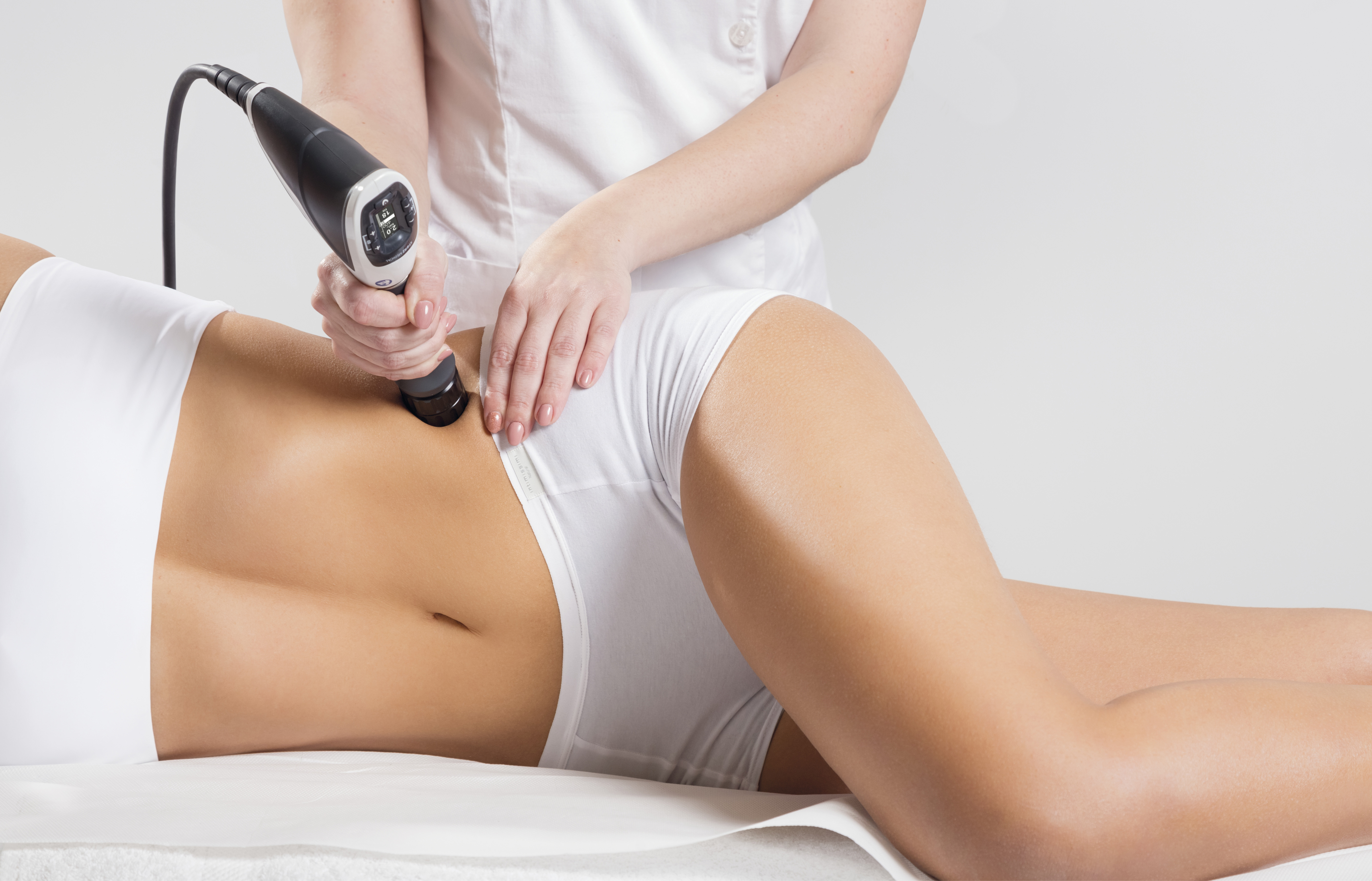
The treatment is applied through the skin of the abdomen and lower pelvis using a handheld probe. Sessions run about 20 to 40 minutes. Most patients describe it as a deep pulsing or tapping sensation. It’s not painful, and I always start at a lower intensity and adjust based on what you’re feeling. A lot of people notice the treated area relaxing almost immediately, which makes sense given what the shockwave is doing to the tissue and nervous system response.
Why We Pair Shockwave with Movement Rehabilitation
Shockwave therapy changes the tissue environment, but healed tissue still needs to be used correctly to stay that way. As I say in Episode 5: regenerative therapy works best when it’s paired with movement-based rehab. At PhysioFit, shockwave for digestive health is always part of a broader plan that includes breathing work, pelvic floor rehabilitation, and nervous system regulation. That combination is what produces results that last rather than improvements that fade.
| Timeline | What Many Patients Experience |
|---|---|
| Sessions 1–3 | Reduced abdominal tension, improved bowel regularity, less bloating |
| Sessions 4–6 | More consistent relief, improved gut-pelvic coordination, reduced urgency |
| Sessions 7+ | Progressive normalization — fewer flare-ups, more predictable digestion |
| After care is complete | Lasting change — the body has a new baseline rather than managed symptoms |
FAQs: Shockwave Therapy for Digestive Health and Bowel Dysfunction Treatment
What makes shockwave therapy for digestive health different from standard bowel dysfunction treatment?+
Is shockwave therapy for digestive health painful?+
How is this different from abdominal massage as a bowel dysfunction treatment?+
How many sessions of shockwave therapy for digestive health will I need?+
Can shockwave therapy help bowel dysfunction after abdominal surgery?+
Does the pelvic floor really affect bowel dysfunction?+
Is shockwave therapy for digestive health available in Los Altos?+
Shockwave therapy for digestive health at PhysioFit goes beyond symptom management. We change the tissue environment so your body can actually heal. Serving Los Altos and Silicon Valley.
 ABOUT THE AUTHOR
Kim Gladfelter, MPT, OCS, FAAOMPT
Women's Health Physical Therapy Specialist at PhysioFit Physical Therapy & Wellness
Kim Gladfelter is a physical therapist, Pilates instructor, educator, author, and co-founder of PhysioFit Physical Therapy & Wellness. She is known as a keen, well-rounded expert of healing through movement and women’s health specialist in the Silicon Valley area.
Kim has helped men and women of all ages to stay active and feel their best. She also writes about managing pain in her health columns, blogs and the local Los Altos Town Crier newspaper as well as reaches out to the local community, support groups, schools, libraries, and sports centers to advise and educate on body awareness and therapeutic exercise.