
 Los Altos, CA

Herniated disc treatment doesn’t have to mean surgery, injections, or living on pain medication. For the vast majority of people, the right physical therapy approach — one that addresses the nerve, the tissue environment, and the movement patterns driving your pain — can produce lasting relief without any of those next steps. This is what herniated disc treatment looks like at PhysioFit in Los Altos.

8 min read · Educational
- Herniated disc treatment without surgery is effective for the vast majority of patients — fewer than 10% ever need an operation.
- The disc itself is rarely the whole story — nerve sensitization, movement patterns, and tissue health all play a role in why pain persists.
- Herniated disc physical therapy at PhysioFit goes beyond generic exercises — it addresses the nerve, the tissue environment, and the movement mechanics driving your symptoms.
- Advanced tools including Shockwave therapy and Stimpod neuromodulation can accelerate recovery for cases that haven’t responded to standard care.
- The goal is not pain management — it’s restoring function and confidence so you can get back to your life without fear of re-injury.
What is a Herniated Disc and Why Does it Cause Pain?
A herniated disc occurs when the soft inner material of a spinal disc pushes through a tear in its outer layer, potentially irritating nearby nerves. It is one of the most common causes of back, neck, and radiating leg or arm pain — but it is also one of the most successfully treated conditions in herniated disc physical therapy. Most people recover fully without surgery.
Your spinal discs act as shock absorbers between the vertebrae, each consisting of a tough outer ring (the annulus fibrosus) and a gel-like center (the nucleus pulposus). When the outer ring weakens or tears — through age, repetitive strain, or sudden load — the inner material can bulge or herniate outward, pressing on nearby nerve roots.
Herniated discs most commonly occur in the lower back (lumbar spine), particularly at the L4-L5 and L5-S1 levels, and in the neck (cervical spine). They are most prevalent in adults between 30 and 50 years old, though they occur across all age groups. According to research published by the National Institutes of Health, up to 2% of people experience a symptomatic herniated disc each year — but the vast majority recover with conservative herniated disc treatment.
Why Does a Herniated Disc Hurt So Much?
The pain from a herniated disc comes from two sources — mechanical compression and chemical irritation. When disc material presses on a nerve root, it disrupts normal nerve signaling, causing pain, numbness, tingling, or weakness along the nerve’s pathway. But the disc material itself also releases inflammatory chemicals that sensitize the nerve, meaning it can become painful even without significant physical compression.
This is why herniated disc pain often feels disproportionate to what shows up on imaging — and why effective herniated disc treatment must address both the tissue and the nervous system response, not just the disc itself.
Herniated Disc Symptoms: What to Look For
Symptoms of a herniated disc vary depending on the location and severity of the herniation, and whether a nerve is being compressed. Common presentations include:
|
Lumbar (Lower Back) Herniated Disc
|
Cervical (Neck) Herniated Disc
|
Why Standard Herniated Disc Treatment Often Doesn’t Last
Most people with a herniated disc are told to rest, take anti-inflammatories, and do some basic exercises. For mild cases, this works. But for the many people whose pain persists or keeps coming back, there is usually more going on than just a disc pressing on a nerve.
| Standard Approach | What It Misses | Why Pain Returns |
|---|---|---|
| Rest and medication | Doesn’t address movement patterns or tissue health | Pain returns when activity resumes |
| Generic PT exercises | Doesn’t address nerve sensitivity or tissue environment | Exercises load tissue that isn’t ready |
| Injections | Reduces inflammation temporarily but doesn’t heal tissue | Symptoms return as inflammation resets |
| Surgery (for most cases) | Removes disc material but doesn’t restore function | Movement patterns and nerve sensitivity remain |
Effective herniated disc treatment requires understanding what is actually driving your specific presentation — the degree of nerve involvement, the state of the tissue, the movement patterns that load the disc, and how the nervous system has responded to the injury. That’s exactly what PhysioFit’s approach to herniated disc physical therapy is built around.
Herniated Disc Physical Therapy at PhysioFit: A Different Approach
Herniated disc physical therapy at PhysioFit in Los Altos begins with a thorough evaluation — not just of the disc, but of every factor contributing to your pain and limiting your recovery. This includes:
- Movement assessment — identifying which positions and patterns load the disc and irritate the nerve, and which directions of movement provide relief
- Nerve tension testing — assessing how sensitized the involved nerve root is and how this is contributing to your symptom pattern
- Tissue health evaluation — understanding the local circulation, inflammation, and healing environment around the disc and nerve
- Postural and loading analysis — identifying the habitual patterns that contributed to the injury and will cause it to recur if not addressed
- Nervous system assessment — evaluating whether central sensitization is amplifying your pain beyond what the disc alone would cause
From this evaluation, your therapist builds an individualized herniated disc treatment plan — not a generic back pain protocol. Every element is chosen based on your specific presentation, and your plan evolves as you progress.
Manual Therapy for Herniated Disc Treatment
Skilled manual therapy is a cornerstone of herniated disc physical therapy at PhysioFit. Hands-on techniques including spinal mobilization, nerve mobilization (neural flossing), and soft tissue work around the affected segments can reduce nerve tension, improve joint mobility, decrease protective muscle spasm, and create the conditions needed for healing. For many patients, targeted manual therapy produces faster and more lasting relief than exercise alone.
Movement Rehabilitation
The goal of movement rehabilitation in herniated disc treatment is not just pain reduction — it’s building a spine that is resilient, well-coordinated, and capable of handling the demands of your daily life and activities. This means progressive loading that respects the current state of the tissue, specific directional exercises based on your movement assessment, and building the deep spinal stabilization that protects against re-injury.
Nervous System and Pain Education
Chronic disc pain almost always involves a sensitized nervous system — where pain signals are amplified beyond what the tissue damage alone warrants. Addressing this through targeted pain education, graded exposure to movement, and breathing-based nervous system regulation is an essential but frequently overlooked component of effective herniated disc treatment. When patients understand why they’re in pain and how to influence it, outcomes improve dramatically.
Advanced Herniated Disc Treatment Options at PhysioFit
For cases that haven’t responded to standard herniated disc physical therapy — or where tissue healing needs an additional boost — PhysioFit offers advanced regenerative and neuromodulation therapies that address the disc and nerve at a deeper level.
|
Shockwave Therapy
Focused acoustic energy reduces neurogenic inflammation around the nerve root, improves circulation to the disc and surrounding tissue, and supports cellular repair — changing the tissue environment so healing can actually happen. |
Stimpod Neuromodulation
Pulsed radiofrequency energy delivered to the affected nerve pathway directly normalizes nerve signaling — reducing the sensitization that keeps disc pain amplified long after the initial injury. Particularly effective for radiating leg or arm pain. Learn more at physiofitpt.com/stimpod. |
EMTT Therapy
High-energy magnetic fields penetrate deeply to support cellular healing, reduce chronic inflammation around the disc, and improve the tissue environment — helping cases that have been stuck for months or years finally move forward. |
What to Expect from Herniated Disc Treatment at PhysioFit
| Phase | Focus | What Happens |
|---|---|---|
| Week 1–2 | Pain reduction & nerve calming | Manual therapy, nerve mobilization, positioning strategies, pain education |
| Week 3–4 | Tissue healing & early loading | Progressive movement, advanced therapy tools where indicated, building tissue tolerance |
| Week 5–8 | Strength & stabilization | Deep spinal stabilization, functional movement patterns, activity-specific rehab |
| Beyond 8 weeks | Resilience & independence | Return to full activity, self-management strategies, prevention of recurrence |
Most patients with an acute herniated disc begin experiencing meaningful improvement within 2–4 weeks of starting herniated disc physical therapy. Chronic or complex presentations — particularly those with significant nerve involvement or long-standing sensitization — may require a longer course of treatment, but respond well to the comprehensive approach PhysioFit takes.
The most common thing patients say after completing herniated disc treatment at PhysioFit: “I wish I had come here first instead of waiting.” Not because it was easy — but because it worked when nothing else had.
Frequently Asked Questions About Herniated Disc Treatment
Can herniated disc treatment really work without surgery?+
How long does herniated disc treatment take?+
What is the best exercise for a herniated disc?+
Will my herniated disc show up on an MRI forever?+
Is it safe to exercise with a herniated disc?+
How is PhysioFit’s herniated disc treatment different from standard physical therapy?+
Where is PhysioFit located and do I need a referral?+
Herniated disc treatment at PhysioFit goes beyond managing your pain — it restores your function, addresses the root cause, and gets you back to your life. Serving Los Altos and Silicon Valley.
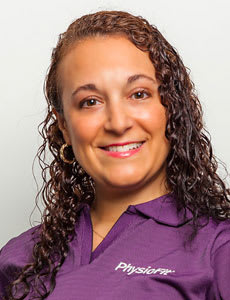 ABOUT THE AUTHOR
Kim Gladfelter, MPT, OCS, FAAOMPT
Women's Health Physical Therapy Specialist at PhysioFit Physical Therapy & Wellness
Kim Gladfelter is a physical therapist, Pilates instructor, educator, author, and co-founder of PhysioFit Physical Therapy & Wellness. She is known as a keen, well-rounded expert of healing through movement and women’s health specialist in the Silicon Valley area.
Kim has helped men and women of all ages to stay active and feel their best. She also writes about managing pain in her health columns, blogs and the local Los Altos Town Crier newspaper as well as reaches out to the local community, support groups, schools, libraries, and sports centers to advise and educate on body awareness and therapeutic exercise.