
 Los Altos, CA

Why an Exercise Program Matters When You Have Osteoporosis
I hear the same worry from patients all the time: “I know I should exercise, but I’m afraid I’ll break something.” I understand that fear, and here’s what I want you to know. The right exercise program for osteoporosis is one of the most protective things you can do for your bones. Bone is living tissue. When your muscles pull on your bones and when you load them through weight-bearing movement, your body responds by laying down stronger bone. Avoiding activity does the opposite. Muscles weaken, balance declines, and the risk of a fall (and a fracture) actually goes up.
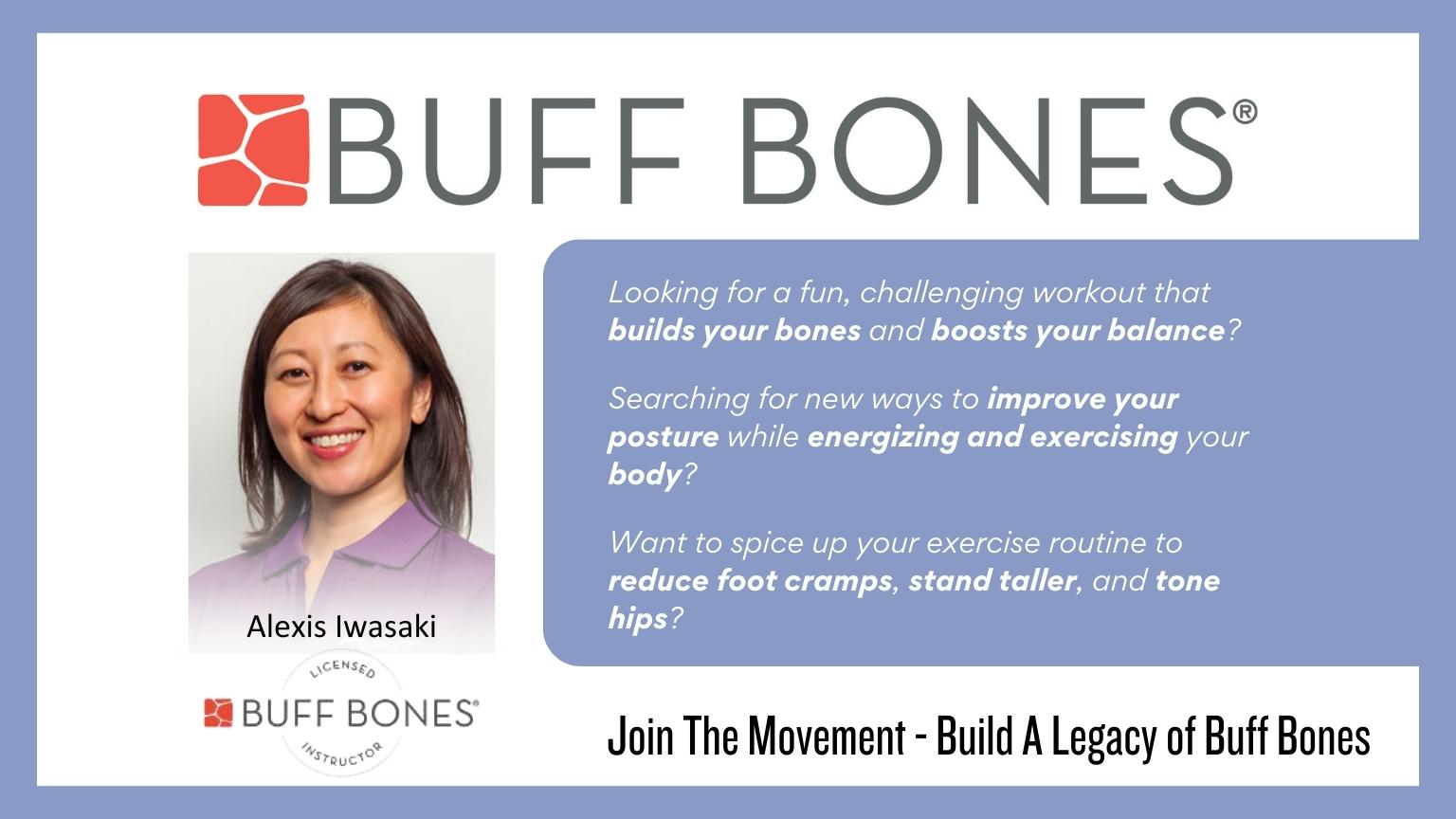
Research consistently supports this. Harvard Health’s overview of exercising for bone strength describes exercise as one of the pillars of bone care, precisely because loading stimulates the body to reinforce bone over time. The key is doing it with proper form, proper progressions, and supervision from someone trained in bone health. That’s exactly what Buff Bones® provides.
How Movement Actually Builds Bone
Here’s the part most people have never had explained to them, and it changes how you think about every session. Your skeleton isn’t a fixed frame that only wears down with age. It’s an active organ that constantly reads the demands you place on it and remodels itself to match. This principle has a name in medicine, Wolff’s law: bone adapts to the loads under which it is placed. Load it thoughtfully, and it reinforces itself. Protect it from all loading, and it quietly concludes that strength isn’t needed.
The messengers in this system are cells called osteocytes, which live inside your bone tissue and act like strain sensors. When you perform weight-bearing movement or contract a muscle firmly against resistance, the bone bends by a microscopic amount. Osteocytes detect that strain and send chemical signals that recruit bone-building cells, called osteoblasts, to deposit new mineral exactly where the demand occurred. That’s why the loading in a Buff Bones® session is deliberate and site-specific: hips, spine, and wrists, the places where fractures matter most, get loaded on purpose.
Two details make this practical. First, bone responds best to loads that are a bit novel: varied directions, varied speeds, resistance it doesn’t meet every day. This is why walking alone, as good as it is for you, tends to plateau. Your skeleton adapted to walking decades ago. Second, muscle is the main way we deliver load to bone safely. Every time a muscle contracts, it pulls on its bony attachment, and that pull is a bone-building signal. Strength work is bone work.
The Remodeling Cycle: Why Consistency Beats Intensity
Your body runs a continuous renovation project on your skeleton. Cells called osteoclasts clear out older bone while osteoblasts build new bone behind them, and in a healthy adult roughly ten percent of the skeleton is replaced each year through this cycle. Osteoporosis develops when the clearing outpaces the building, which is exactly what tends to happen after menopause, when the drop in estrogen removes one of the natural brakes on osteoclast activity.
Exercise is one of the few tools that leans on the other side of that equation, encouraging the building crew. But here’s the catch: a single remodeling cycle at any one site takes months to complete. That’s why bone care rewards patience and consistency rather than intensity. One heroic workout does very little; a sustainable weekly rhythm, held over months and years, is what shifts the balance. It’s also why we design sessions people genuinely want to keep coming back to.
What Makes an Exercise Program for Osteoporosis Safe?
Not every workout is appropriate when bone density is low, and the safety rules aren’t arbitrary; each one comes from how bone actually fails. A few principles guide everything we do in a Buff Bones® session:
- Alignment before loading. We position the spine, hips, and shoulders well first, then add resistance. Strong bones are built by loading them in good alignment, not by loading them any which way.
- Careful with spinal flexion. Loaded forward bending and crunch-style movements place compressive stress on the front of the vertebrae, which is where fragile bone is most vulnerable. We favor extension, hip-hinging, and neutral-spine strength work instead.
- Balance is trained on purpose. Most fractures happen because of a fall. Every session includes deliberate balance and footwork training so you’re steadier in daily life, not just in the studio.
- Progression is gradual and individual. Small groups mean your instructor can watch your form and modify for your body, your history, and your bone density results.
Healing Is More Than Density: Balance, Posture, and Confidence
A DEXA score is one number, but fracture risk is a whole-body story. The majority of osteoporotic fractures happen because of a fall, which means the reflexes that catch you matter as much as the mineral in your bones. That’s trainable. The footwork, single-leg work, and reaction drills woven into each session are teaching your nervous system to respond faster and steadier when life surprises you: a curb, a pet underfoot, a slick patch of floor.
Posture work matters for the same reason. Strengthening the muscles that extend your spine helps counter the rounded, forward-drawn posture that vertebral changes can create, which improves how you carry load through the spine all day, not just in class. And there’s a quieter benefit I see constantly: confidence. When you know how to hinge, lift, reach, and get up from the floor safely, you stop shrinking your life to avoid your bones. Movement stops being the thing you fear and becomes the thing that’s healing you.
Who Benefits Most from This Osteoporosis Exercise Program?
Buff Bones® was designed for people with osteoporosis and osteopenia, but I recommend it more broadly than that. It’s a great fit if you:
- Recently received a DEXA scan result showing low bone density and aren’t sure what’s safe
- Are postmenopausal and want to get ahead of bone loss rather than react to it
- Have a family history of osteoporosis or fractures
- Want to improve posture, balance, and confidence on your feet
- Are returning to exercise after time away and want expert eyes on your form
Session format, scheduling, and everything else about the program now lives on our Buff Bones® page. You can also see all of our small group offerings on our weekly session schedule, and reservations are required, so call or text us at (650) 947-8500 to save your spot.
You have a recent fracture, significant pain, or a complicated health history. We can assess where you are and decide whether one-on-one work makes sense before joining the group. You can request a fitness consultation and we’ll help you map out the right starting point.
 ABOUT THE AUTHOR
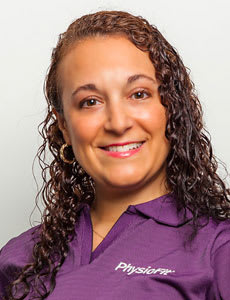
Kim Gladfelter, MPT, OCS, FAAOMPT
Women's Health Physical Therapy Specialist at PhysioFit Physical Therapy & Wellness
Kim Gladfelter is a physical therapist, Pilates instructor, educator, author, and co-founder of PhysioFit Physical Therapy & Wellness. She is known as a keen, well-rounded expert of healing through movement and women’s health specialist in the Silicon Valley area.
Kim has helped men and women of all ages to stay active and feel their best. She also writes about managing pain in her health columns, blogs and the local Los Altos Town Crier newspaper as well as reaches out to the local community, support groups, schools, libraries, and sports centers to advise and educate on body awareness and therapeutic exercise.